
The presence of 1993 coins in active monetary circulation after decades stems from the combined production capacities of the U.S. Mint and the physicochemical properties of used materials.
This issue represents one of the most massive production stages in modern numismatic history.
Minting volume in 1993 became the determining factor for the ubiquitous presence of these coins in circulation.
High production affects the 1993 penny value and rates ensured market saturation, exceeding the natural rates of wear and loss of monetary units.
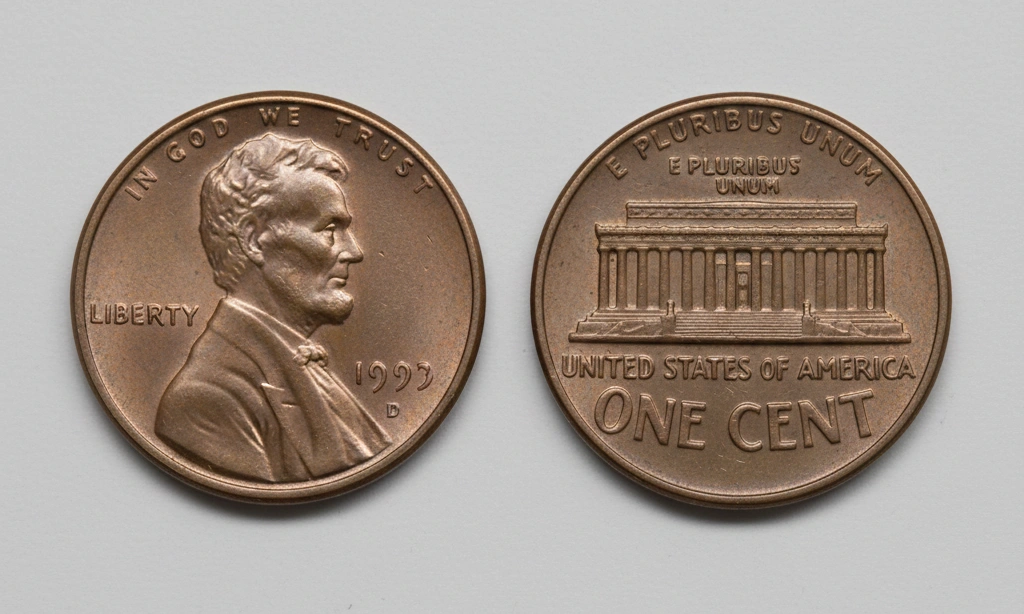
Mint | Mark | Mintage | Share of Total Annual Output |
Philadelphia | P | 5,684,705,000 | 46.9% |
Denver | D | 6,426,410,000 | 53.1% |
Total | 12,111,115,000 | 100% | |
A total mintage exceeding 12 billion units guarantees the mathematical probability of encountering these coins in daily transactions.
Withdrawal rates of damaged specimens by government agencies do not compensate for the volume of the originally issued mass.
Composition and Physical Durability
The longevity of 1993 cents depends directly on their material structure adopted in 1982.
Replacing expensive copper with a zinc core allowed for reduced production costs while maintaining external characteristics.
Core: 97.5% zinc.
Plating: 2.5% copper (electroplated application).
Plating Thickness: Approximately 0.005 mm.
The copper plating protects the zinc core from oxidation in the absence of deep mechanical damage.
Coins not having been subjected to aggressive chemical environments retain relief readability for 30 or more years.
Retention in Circulation
The low purchasing power of the cent prevents its active removal from circulation through private hoarding.
The absence of a 1-cent denomination deficit eliminates the need for mass melting or replacement with alternative payment methods.
Production Cost: Manufacturing one cent costs the state more than its face value, averaging 2.7–3.0 cents.
Legislative Restrictions: Current U.S. laws prohibit mass export and melting of cents and nickels for commercial purposes.
Low Inflationary Pressure on Metal: The value of zinc contained in the coin does not reach the threshold making illegal melting economically viable.
Grading and Auction Value of Rare Conditions
Despite billions of coins remaining in circulation, specimens in ideal condition are withdrawn for professional coin value app evaluation.
The market value of such coins significantly exceeds the face value based on auction sales data from recent years.
Grade | Record Price (USD) | Auction / Date |
MS69 Red (1993-P) | $2,585 | Heritage Auctions (2012) |
MS69 Red (1993-D) | $720 | Heritage Auctions (2023) |
MS68 Red (1993-D) | $144 | PCGS Auction (2018) |
The annual price increase for coins in MS69 condition is approximately 4–6% depending on auction demand.
Prices for coins in MS64 and lower conditions remain static, showing zero growth relative to face value.
Attrition Process and Mintage
Federal Reserve studies demonstrate patterns of coin withdrawal from circulation.
Every year, a certain percentage of the 1993 mintage is lost due to various factors.
Mechanical Destruction: Loss in soil, road surfaces, or during construction.
Chemical Corrosion: Destruction of the zinc core after copper layer damage (known as "zinc rot").
Passive Storage: Accumulation of coins in household containers without returning to the banking system.
According to statistical models, the annual loss of active mintage ranges from 1.5% to 2.2%.
Considering the initial volume of 12 billion, the estimated number of 1993 coins remaining in circulation currently exceeds 6 billion pieces.
1993 Minting Quality Factors
The condition of dies used at the mints in 1993 affected the clarity of elements, determining the longevity of images.
Using worn dies led to the appearance of coins with shallower relief, wearing down faster during operation.
Specimens struck with new dies retain the detailing of Lincoln's portrait and the memorial even after losing their luster.

Finding rare varieties in the general mass of 1993 coins stimulates periodic review of accumulations.
Several types of errors appearing in active circulation are highlighted and can be checked with the free coin identifier app.
Double Struck: A second strike with displacement, significantly increasing the coin's value.
Lamination Errors: Peeling of the copper layer exposing the zinc core.
Die Chips: Small raised areas of metal on the surface.
The price for 1993 mint errors varies from $5 to $150 depending on the severity of the defect.
Inflationary Impact on Circulation
The decrease in the real value of one cent leads to consumers picking up fallen coins less often and using them for payments less frequently.
This contributes to the "stagnation" of the 1993 mintage in various collection points for small change.
Retail chains continue issuing change in cents, maintaining their movement.
Bank change machines return millions of old coins to circulation monthly.
The lack of plans for cent withdrawal in the U.S. guarantees the presence of the 1993 issue in citizens' wallets for the next 10–15 years.
Issue Year | Total Mintage (billions) | Circulation Status |
1992 | 9.09 | Common |
1993 | 12.11 | Massive |
1994 | 13.63 | Peak |
The period of the early 1990s was characterized by increasing minting volumes to meet economic needs.
The 1993 mintage, being among the top three of the decade, ensures a high density of coin distribution across all U.S. states.